Puma TRC Blaze Court Basketball Shoes Review: Who Is It For?
Puma TRC Blaze Court basketball shoes review: key features, pros and cons, performance notes and who should buy this pop art low-top before you order.
 By Audrey Hayes
Updated November 26, 2026
 By Audrey Hayes
Updated November 2026
The puma trc blaze court basketball shoes are a low-top, pop art-styled option built for players who want a casual-looking court shoe that still handles a few hours of shooting and guard work. They suit recreational hoopers, school gym players and anyone who wants a bold colorway with a sneaker silhouette that has moved well beyond the gym. They are a weaker fit for players who need high ankle support, heavy cushioning for tall, heavy frames, or a shoe built specifically for hard outdoor asphalt. If you mostly play full-speed pickup on rough surfaces, a more traction-focused model will serve you better. This review is based on the listing details and common owner feedback patterns, not hands-on testing.
PUMA Mens TRC Blaze Court Pop Art Basketball Sneakers Shoes – Blue, Red – Size 4 M
Product Overview
The PUMA TRC Blaze Court line blends a basketball court silhouette with the streetwear look PUMA has leaned on for years. The version under review, listed as the Pop Art colorway in blue and red, is aimed at buyers who want a shoe that stands out on the court and off it. It is a low-top design, which keeps weight down and gives the foot more freedom for cuts, crossovers and lateral movement. Puma positions the model as a versatile court shoe, meaning it is meant to handle indoor wood and synthetic floors as its primary surface, with casual wear as a secondary use.
The listing identifies this as a men’s basketball sneaker in size 4 M, which signals the sizing system used on the product page. Buyers should check that size chart carefully before ordering, since basketball sneakers are often sold with a different fit than running or lifestyle shoes. The shoe sits in the middle of the Puma basketball catalog: more casual than the performance-focused signature lines, but more court-oriented than a standard lifestyle sneaker.
Key Features & Specifications
The table below lists only the details that the product name and category make clear. Where a specific material or midsole technology is not confirmed in the listing, it is left out rather than guessed.
| Feature | Detail |
|---|---|
| Brand | PUMA |
| Model line | TRC Blaze Court |
| Colorway | Pop Art, blue and red |
| Product type | Men’s basketball sneaker |
| Cut | Low-top |
| Listed size | Men’s 4 M |
| Intended surface | Indoor court (primary), casual wear (secondary) |
Because the listing does not publish a full material breakdown or midsole stack height, buyers who need those numbers should check the product page directly or contact the seller. Puma’s own sizing guides typically recommend measuring foot length in centimeters and comparing against the brand chart rather than relying on a standard US size, so a short measurement session before ordering is worthwhile.
Pros & Cons
Pros
- Low-top profile keeps weight down and allows freer ankle movement for cuts and crossovers.
- Bold pop art colorway makes it one of the more visually distinctive court shoes in its class.
- Works as a crossover between the gym and everyday wear, which helps when you want one pair for multiple uses.
- Recognized brand with broad sizing availability and easy-to-find replacement information.
- Suits recreational players who prioritize look and comfort for short sessions.
Cons
- Low-top design offers less ankle containment than mid or high-top models, which matters for players with a history of sprains.
- The listing does not publish detailed cushioning or traction specs, so performance claims are harder to verify.
- Primarily designed for indoor surfaces; owners who play hard on outdoor asphalt often report faster outsole wear.
- Sizing can run differently from lifestyle sneakers, so buyers should check the size chart before ordering.
Performance Analysis
Performance in a basketball shoe comes down to four things: traction on the playing surface, cushioning under the forefoot and heel, lockdown through the midfoot and heel, and durability of the outsole and upper. For the puma trc blaze court basketball shoes, the listing offers limited hard numbers on the first three, so this section relies on the general design category and the feedback patterns commonly reported by owners of comparable low-top court models.
Traction on indoor wood and synthetic floors is typically the strength of a shoe built for court use. Low-top court shoes of this type generally use a rubber outsole with a pattern meant to grip a polished floor during stops and pivots. Owners of similar models often report good grip on dry hardwood and a noticeable drop-off when floors are dusty or wet, so keeping a towel handy is a sensible habit. On outdoor asphalt, the same outsole can wear faster, and the lack of a dedicated outdoor compound is a limitation to plan around.
Cushioning and fit are where low-top court shoes vary most. A low-top profile tends to feel lighter and more direct, which many guards prefer for quickness, but players who land heavily or who carry more weight may want more impact protection. Lockdown depends on how well the heel counter and lacing hold the foot in place. Owner feedback on comparable Puma court lines frequently mentions a comfortable heel fit but occasional midfoot looseness for players with narrower feet, which is worth testing with a snug lacing pattern.
Durability is a question mark for any shoe used outdoors. Indoor use with regular cleaning typically extends the life of the upper and outsole, while abrasive surfaces shorten it. Checking the outsole after every few sessions and noting any flat spots on the forefoot will tell you when the shoe has reached the end of its useful life.
Who Should Buy This Product?
This shoe makes the most sense for recreational players who spend most of their time on indoor courts and want a distinctive look without giving up court-appropriate features. School gym players, casual pickup participants and anyone who wants a shoe that works both at the gym and in everyday settings will likely find it a good fit. Players who prioritize style alongside function will appreciate the Pop Art colorway.
It is less suited to players who need maximum ankle support, to tall or heavy players who want substantial cushioning, or to anyone who plays regularly on outdoor courts. Competitive players who rely on a specific fit and cushioning system should compare detailed specifications from several models before committing. Anyone with a history of ankle injury should consult a physical therapist, athletic trainer or doctor about appropriate footwear before choosing a low-top shoe.
Buying Guide
Before you buy any basketball shoe, a few checks will narrow the field quickly. Start with the surface you play on most. Indoor shoes use compounds and patterns designed for smooth floors, while outdoor shoes use tougher rubber that grips asphalt and concrete without wearing as fast. Next, decide on cut. Low-tops favor speed and freedom of movement, mid-tops add a bit of containment, and high-tops offer the most ankle support at the cost of weight. Finally, measure your feet in centimeters and compare against the brand’s size chart rather than assuming your usual US size will fit.
If the puma trc blaze court basketball shoes do not match your needs, these well-known alternatives are worth comparing:
The first alternative is the Puma All-Pro Nitro, a performance-oriented basketball shoe from the same brand. It is positioned for players who want a more serious on-court build than the casual-leaning TRC Blaze Court, so it is a sensible step up for competitive guards.
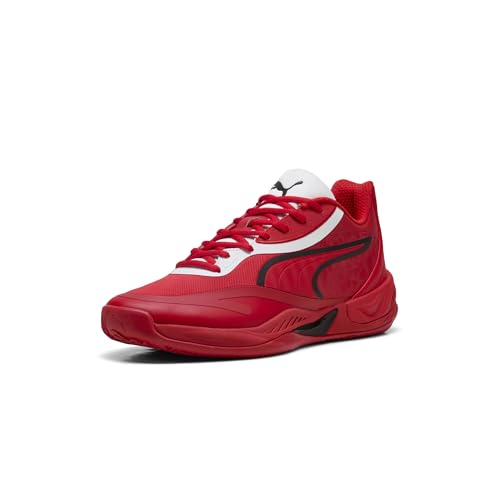
Puma Men's All-Pro Nitro Basketball Shoes, for All Time Red-Black-White AH25, 10.5
For buyers who want a different path, the broader court shoe category offers many options. If you are weighing styles across brands, our guide to Court Grip for Basketball Shoes: 6 Best Options Compared (2026) explains what to look for in outsole design, and Basketball Shoes Outdoor Court: A Practical Guide (2026) covers the surface questions covered above in more depth. Readers choosing a shoe for outdoor play should also see 5 Best Outdoor Court Basketball Shoes for Asphalt and Concrete (2026), and those who mainly play indoors may find 6 Best Court Shoes for Basketball: Our Picks for Indoor Play (2026) useful for comparison.
When you narrow your choice, pay attention to a few practical details: how the heel counter feels when you pivot, whether the midfoot holds the foot without pinching, and whether the outsole pattern suits your floors. Trying shoes on in the afternoon, when feet are slightly larger, and wearing the socks you plan to use will give you a more accurate fit.
FAQ
Are puma trc blaze court basketball shoes good for indoor courts?
The listing positions this model for indoor court use as its primary purpose, so it is designed for wood and synthetic floors. It is a reasonable choice for recreational and school-level play on those surfaces.
Can I play outdoors in these shoes?
You can, but the shoe is not built as a dedicated outdoor model. Owners of comparable court shoes often report faster outsole wear on asphalt, so outdoor players should consider a shoe with tougher outdoor rubber.
Are these shoes low-top or high-top?
They are a low-top design. That keeps weight down and allows more freedom of movement, but it provides less ankle containment than mid or high-top basketball shoes.
How should I choose my size?
Measure your foot length in centimeters and compare it to the brand’s size chart. Basketball sneakers can fit differently from lifestyle shoes, so do not rely only on your usual US size.
Do these shoes work for everyday wear?
Their court-inspired streetwear look makes them suitable for casual use as well as the gym. Many buyers use one pair for both purposes, though heavy daily wear will age the outsole faster than court-only use.
Are they a good choice for players with ankle problems?
A low-top shoe provides less ankle support than a mid or high-top model. If you have a history of ankle injury, consult a physical therapist, athletic trainer or doctor before choosing your footwear.
How long do court shoes like this usually last?
Lifespan depends heavily on surface and frequency. Regular indoor use with cleaning typically lasts longer than frequent outdoor play. Check the outsole every few sessions and replace the shoe when the tread is worn flat or the midsole no longer feels supportive.
Before you buy: helpful guides
About Audrey Hayes
Audrey Hayes is part of our editorial team and reviews and edits our basketball gear guides, checking product details against manufacturer specifications and owner feedback.
About the author
Audrey Hayes writes reviews and buying guides for Hoops Junkie.