In-Ground vs Bolt Down Basketball Hoop (2026): Which Is Better for Driveways?
Comparing an in-ground vs bolt down basketball hoop? See how installation, stability, portability and cost of ownership stack up to find your best fit.
 By Audrey Hayes
Updated November 25, 2026
 By Audrey Hayes
Updated November 2026
An in-ground basketball hoop is the better choice if you want a permanent, rock-solid setup and don’t mind a one-time concrete install. A bolt down hoop wins for renters, people who want to move the hoop later, or anyone who needs a faster, less invasive setup on an existing slab. Both options use a steel pole and a backboard, but how they attach to the ground drives almost every other difference between them, so the decision mostly comes down to how permanent you want the hoop to be.
Here is how the two compare on the criteria that matter most for a driveway or backyard hoop.
| Criteria | In-Ground Hoop | Bolt Down Hoop |
|---|---|---|
| Mounting method | Pole set in a concrete footing, usually 24 to 36 inches deep | Base plate bolted to an existing concrete slab or surface |
| Installation time | Often a full weekend plus concrete cure time | Usually a few hours with basic tools |
| Stability during play | Very high, minimal sway or rocking | Good, but depends on slab thickness and bolt quality |
| Portability | Essentially permanent | Can be unbolted and moved with effort |
| Height adjustment | Often available on adjustable models | Often available on adjustable models |
| Resale and property impact | Adds permanent value to a home setup | Easy to remove when you move |
| Best surface | Soft ground where you can dig | Existing concrete slab at least 4 inches thick |
Installation: Which Is Easier to Set Up?
The bolt down hoop wins on installation. Most bolt down kits assume you already have a flat concrete slab, and the work involves positioning a base plate, drilling holes into the concrete, setting anchors and bolting the pole to the plate. A typical install can be finished in an afternoon by one or two people with a rotary hammer drill, a socket set and a level.
An in-ground hoop requires more labor. You dig a hole, usually 24 to 36 inches deep depending on the manufacturer’s spec, set the pole, and pour concrete around it. The concrete needs time to cure before you can play, and most manufacturers recommend waiting several days before putting weight on the hoop. Owners often describe the digging as the hardest part, especially in clay or rocky soil. If you hire out the work, the labor is the main cost, so it is worth getting a quote before you commit.
Before choosing either option, check the manufacturer’s installation manual for the exact hole depth, concrete mix and slab thickness requirements. Those numbers vary between models.
Stability and Durability: Which Holds Up Better?
The in-ground hoop wins on stability. A pole set in a concrete footing barely moves when players dunk or hang on the rim. The rigid base also tends to hold alignment over years of use. Owners of in-ground models often report that the backboard stays square and the rim stays level even after heavy play. We also found Goaliath vs Silverback In Ground Basketball Hoop (2026): Which Is Better? useful on this point.
A well-installed bolt down hoop is also stable, but its performance depends on the slab and the anchors. If the slab is thin, cracked or poorly cured, the base can shift or the anchors can loosen over time. Using the correct anchor size and tightening to the torque specified in the manual makes a large difference. Checking the bolts every few months is a simple habit that prevents most stability problems.
For both types, the pole and backboard materials matter as much as the mount. Look for a powder-coated or galvanized steel pole, and a backboard made from polycarbonate or tempered glass with a rim that is securely welded or bolted.
Portability and Flexibility: Which Can You Move?
The bolt down hoop wins on portability. Because it attaches to a slab with bolts, you can remove the hardware, lift the pole off the base plate, and relocate the hoop with a helper or a dolly. It is not light, so this is still real work, but it is far easier than digging out a concrete footing.
An in-ground hoop is effectively permanent. Removing it means breaking out the concrete footing, which is labor-intensive and leaves a hole to fill. Some people choose in-ground hoops specifically because they want the setup to stay put for decades. If you think you might move within a few years, a bolt down model is the safer bet.
Renters also tend to favor bolt down models, though you should confirm with your landlord before drilling into any concrete surface. Some leases prohibit permanent modifications, and a removable base can still leave anchor holes behind.
Surface Requirements: What Ground Do You Need?
An in-ground hoop needs diggable soil and room for a footing. It works best in a yard or a driveway edge where you can dig without hitting utility lines. Always call your local utility locating service before digging. In many areas that is a free service, and it is required by law in parts of the United States.
A bolt down hoop needs a solid, level surface, typically a concrete slab at least 4 inches thick. Many manufacturers specify a minimum concrete strength as well, so check the spec sheet. A slab that is cracked, heaved or sloped may not work, and placing a bolt down base on an asphalt surface is generally not recommended because asphalt is not rigid enough to hold anchors securely.
Cost of Ownership: Which Costs Less Over Time?
On a budget basis, the bolt down hoop usually wins if you already have a suitable slab, since the install is simpler and needs fewer materials. The in-ground hoop can be a better long-term value for people who plan to keep the hoop for many years, because there is no need to reinstall it. Both options can be bought in budget, mid-range or premium versions, and the gap between tiers often matters more than the mounting style itself. Factor in any labor you would pay to a contractor, the cost of concrete if you pour a footing, and the cost of replacement parts like nets and backboards. A related read: Basketball Hoop In Ground vs Portable: Which Should You Choose? (2026).
Maintenance and Long-Term Care
Both types need periodic checks. For in-ground hoops, inspect the pole for rust or paint damage, and watch for any tilt that could indicate frost heave or soil settling. For bolt down hoops, retighten the anchor bolts after the first few weeks of use and then check them a few times a year. Replacing a torn net or a damaged rim is the same for both styles. Consult a professional structural contractor if you notice significant cracking in a slab or footing, since that can affect safety.
Which Should You Choose?
- Choose an in-ground hoop if you own your home, plan to stay for many years, and want the most stable setup possible for heavy play.
- Choose an in-ground hoop if you have soft ground, are comfortable with digging or can hire a crew, and want a permanent fixture.
- Choose a bolt down hoop if you already have a thick, level concrete slab and want a faster installation.
- Choose a bolt down hoop if you rent, might move within a few years, or want the option to relocate the hoop.
- Choose a bolt down hoop if you are a casual player and do not need the rigidity of a concrete footing.
If you are leaning toward an in-ground model, the Spalding 54 Inch Basketball Hoop In Ground: 6 Best Picks for Driveways (2026) guide covers several popular options, and the Spalding In-ground Basketball Hoop Instructions: Step-by-Step Setup Guide walks through the install. For a bolt down setup, start with 5 Best In Ground Basketball Hoop Bolt Down Options for Driveways (2026) and the 5 Best J-Bolt In-Ground Basketball Hoop Anchor Kits for Driveways and Backyards for anchor hardware.
Here are some popular options to look at for each style:
In-ground option: Silverback NXT 54 In-Ground Basketball Hoop View on Amazon
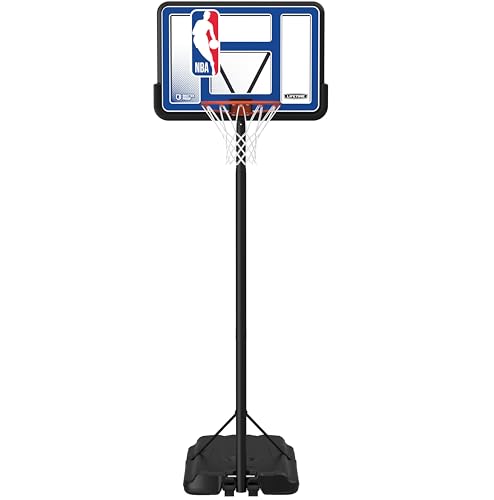
Bolt down option: Lifetime Adjustable Portable Basketball Hoop, a freestanding system that sits on a base rather than a bolt-down footing View on Amazon
Note that the Lifetime model is a portable system, so it is best for players who want flexibility above all else.
FAQ
Can I convert an in-ground hoop into a bolt down hoop?
Not directly. The two systems use different pole and base designs. If you want to switch, you would generally need a new hoop with a bolt down base plate and a fresh install.
Do I need a permit to install an in-ground basketball hoop?
It depends on your city, county and HOA rules. Some areas require a permit for structures set in concrete, especially near property lines. Check with your local building department before digging. For a deeper look, Lifetime vs Spalding in Ground Basketball Hoop (2026): Which Should You Choose? covers this in detail.
How thick does a concrete slab need to be for a bolt down hoop?
Most manufacturers specify at least 4 inches of concrete, often with a minimum compressive strength. Always confirm the exact requirement in the installation manual for your model.
How long does concrete need to cure before I can play?
Concrete typically needs several days before light use and about a week or more before heavier play, depending on temperature and mix. Follow the timeline in your manual and avoid hanging on the rim until the footing is fully set.
Is a bolt down hoop as safe as an in-ground hoop?
A properly installed bolt down hoop can be very safe, but its stability depends on the slab and anchor quality. Check the bolts regularly and consult a professional installer if you have questions about your slab’s condition.
Conclusion
The choice between an in-ground and a bolt down hoop comes down to permanence and installation effort. An in-ground hoop offers the most stability and is the right pick for homeowners who want a fixed, long-lasting setup. A bolt down hoop is faster to install, easier to move and well suited to renters or anyone with a suitable concrete slab. Match the option to your ground, your timeline and how often you expect to relocate, and you will end up with a hoop that works for years.
Before you buy: helpful guides
About Audrey Hayes
Audrey Hayes is part of our editorial team and reviews and edits our basketball gear guides, checking product details against manufacturer specifications and owner feedback.
About the author
Audrey Hayes writes reviews and buying guides for Hoops Junkie.