Lifetime 46 Inch Shatterproof Portable Basketball Hoop Review (2026)
Considering a lifetime 46 inch shatterproof portable basketball hoop? See who it suits, its key specs, pros and cons, and how it compares to two alternatives.
 By Audrey Hayes
Updated November 26, 2026
 By Audrey Hayes
Updated November 2026
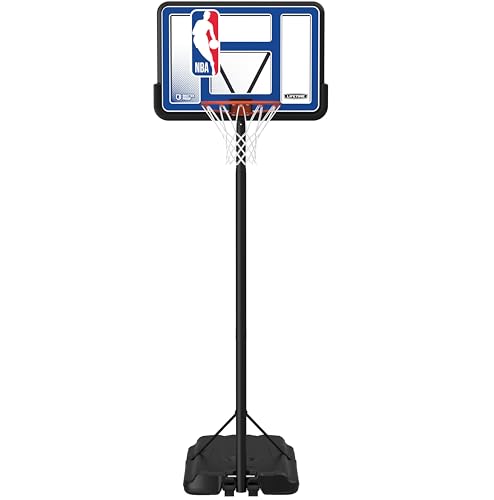
The Lifetime NBA League Edition Portable Basketball Hoop is a lifetime 46 inch shatterproof portable basketball hoop option aimed at families, recreational players and anyone who wants a sturdy backyard or driveway setup without a permanent concrete footing. It suits buyers who want adjustable height between 7.5 and 10 feet, a polycarbonate backboard that resists cracking, and a steel frame that can be moved when needed. It is less suitable for serious players who want a full-size 72-inch glass backboard, a fixed in-ground installation, or a hoop that stays rock-solid in strong wind without extra anchoring. Buyers on a tight schedule should also plan for assembly time, since portable hoops of this type usually take a few hours with two people.
Lifetime NBA League Edition Portable Basketball Hoop, Adjustable Height 7.5-10 Ft, 44 Inch Shatterproof Polycarbonate Backboard, Steel Frame, Black/Clear
Product Overview
The Lifetime NBA League Edition Portable Basketball Hoop is built around a 44-inch shatterproof polycarbonate backboard, which is the size class most people shorten to “46-inch” in searches. The backboard is mounted to a steel pole and sits on a base designed to be filled with sand or water for ballast. The overall look follows the NBA-style graphic treatment that Lifetime uses across much of its portable line, with a black and clear color scheme.
The hoop is positioned in the mid-range of Lifetime’s portable lineup. It is not the largest backboard the brand sells, but it offers a practical balance of size, weight and adjustability for home courts. Owners often report that it is easier to store and move than larger 54-inch and 60-inch models, while still giving a playing surface that feels close to regulation for younger and recreational players.
Because it is a portable unit, the main trade-off is stability. Portable hoops rely on their base for resistance to tipping, and performance depends heavily on how well the base is weighted and how the hoop is positioned. Owners generally treat the product as a backyard or driveway solution rather than a competition-grade system.
Key Features & Specifications
The table below lists the specifications named in the product listing or commonly associated with this model. Confirm exact measurements against the packaging or manufacturer documentation before purchase, as details can vary by production run.
| Feature | Specification |
|---|---|
| Adjustable height range | 7.5 to 10 feet |
| Backboard size | 44 inches (commonly referred to as 46-inch class) |
| Backboard material | Shatterproof polycarbonate |
| Frame material | Steel |
| Color | Black and clear |
| Mounting type | Portable, base with ballast capacity |
| Installation | Assembly required, typically with two people |
| Intended use | Outdoor driveway or backyard |
Manufacturers generally specify that portable hoops of this type should be filled with sand or water to the recommended capacity to prevent tipping. Check the base instructions for the exact fill amount, since this varies by model and directly affects stability.
Pros & Cons
Pros
- Polycarbonate backboard is designed to resist cracking, which suits households with younger players.
- Height adjustment from 7.5 to 10 feet covers children, teens and adults in one unit.
- Steel frame offers a sturdier feel than many lightweight plastic-framed alternatives.
- Portable design allows the hoop to be relocated, stored or repositioned as needed.
- The 44-inch backboard is a practical middle size, easier to handle than the largest options.
- Fill-to-ballast base helps resist tipping once properly weighted.
Cons
- Stability depends heavily on proper base filling and placement; under-filled bases can tip in wind.
- Assembly can be time-consuming and generally requires two adults.
- The backboard is smaller than the 54-inch and 60-inch acrylic options some players prefer.
- Polycarbonate can show scratches or cloudiness over years of sun exposure.
- Not suitable for permanent installation or competition-level play.
- Moving a filled base is heavy work, so repositioning is not effortless.
Performance Analysis
Performance for a portable hoop comes down to three things: rim feel, backboard rebound and base stability. The rim on Lifetime portable units is typically a standard-diameter steel ring, which gives a familiar shooting feel for players who are used to regulation rims. Owners often report that the rim is firm enough for dunking when the height is set appropriately, though heavier players may notice some flex during hard dunks.
The polycarbonate backboard produces a livelier, more predictable rebound than thin plastic boards. Because it is shatterproof, it is far less likely to break from a mis-thrown ball, which is one of the most common complaints owners have about cheaper backboards. Light flex in the board is normal and does not usually affect shooting accuracy.
Base stability is where expectations need to be set. A correctly filled base on a level surface should hold well during normal play, but owners consistently note that under-filling the base or playing on a sloped driveway makes the hoop noticeably less stable. Setting the height to 7.5 feet and filling the base fully gives the most solid result. Wind is the main external factor; on exposed lots, many owners add extra ballast or anchor the base to reduce movement.
Height adjustment is smooth enough for routine changes, though it is worth lubricating the telescoping pole and checking the locking pins each season to keep adjustments secure.
Based on specifications and owner feedback patterns, this hoop performs best as a family or recreational unit on a flat, level surface with a properly filled base. It is not designed to match the feel or stability of a permanently installed in-ground system.
Who Should Buy This Product?
This hoop is a good match for families with children aged roughly 6 to 16 who need height flexibility, for households that want a portable setup for a driveway or patio, and for adults who want casual half-court play without the commitment of concrete. It also suits renters or homeowners who may move in the future and want a hoop they can take with them.
You should skip this product if you need a large glass backboard, if you plan to play competitive or high-intensity games, or if your driveway slopes significantly. Buyers who want a permanent, fixed-height system should look at in-ground hoops instead. Anyone who is uncomfortable with heavy lifting or two-person assembly may want a pre-assembled option.
Buying Guide
When choosing a portable hoop in the 44 to 46-inch class, start by checking three things: backboard material, base design and height range. Polycarbonate backboards are the most common choice for shatter resistance, while acrylic offers a clearer look and sometimes a stiffer rebound. Steel frames add stability over plastic, and a base that accepts both sand and water gives you flexibility in ballast.
Before buying, measure your playing area. You need clearance behind the backboard and enough room for the base to sit level. Plan for at least 10 feet of open space in front of the hoop to allow for drives and shooting. Confirm the maximum height you need, since some players will want to lower the rim for younger children.
Consider storage and movement. If you plan to relocate the hoop regularly, a base with wheels makes a noticeable difference, though filled bases are still heavy. Check the assembly requirements so you know whether you need one helper or two.
Here are three well-known alternatives to compare:
- Lifetime Portable Basketball Hoop, Adjustable Height 7.5-10 Ft, 44 Inch Shatterproof Fusion Backboard, Base with Wheels. This option is similar in height range and backboard size but adds a wheeled base, which helps if you move the hoop often.

Lifetime Portable Basketball Hoop, Adjustable Height 7.5-10 Ft, 44 Inch Shatterproof Fusion Backboard, Base with Wheels
- Lifetime Outdoor Portable Basketball Hoop, 48 Inch Backboard, 8-10 Ft Speed Shift Adjustable Height. A larger 48-inch backboard with a lower height range, useful for households focused on younger players and a bigger shooting target.

Lifetime Outdoor Portable Basketball Hoop, 48 Inch Backboard, 8-10 Ft Speed Shift Adjustable Height
If you are comparing sizes and styles more broadly, you may also find the guide Lifetime Adjustable Portable Basketball Hoop 52 Inch Polycarbonate: A Practical Guide (2026) useful, along with Securing a Portable Basketball Hoop: 6 Steps to a Stable Setup for stability planning. Owners of this hoop may also want to read Lifetime Portable Basketball Hoop Assembly Instructions: A Practical Guide (2026) before unboxing.
FAQ
Is a 46-inch backboard actually 46 inches?
The listing and most owner discussions refer to this hoop as a 46-inch class unit, but the backboard measurement named in the listing is 44 inches. Check the packaging or manufacturer specifications for the exact dimensions before buying.
How much should I fill the base?
Manufacturers specify a fill capacity for the base. Fill it fully with sand or water according to the instructions. Under-filling is the most common cause of tipping and wobble.
Can this hoop be used on a sloped driveway?
It is possible but not ideal. Owners often report better stability on level ground. On a slope, you may need extra ballast or anchoring to keep the hoop steady.
How long does assembly take?
Assembly time varies with experience and tools, but portable hoops of this type commonly take a few hours and usually require two people for safe handling of the pole and backboard.
Is polycarbonate better than acrylic?
Polycarbonate is generally more shatter resistant, which suits households with children. Acrylic can offer a clearer finish and a different rebound feel. Neither is universally better; choose based on your priorities.
Can I adjust the height easily?
Height adjustment uses a telescoping pole with locking pins. It is manageable for most adults, but lubricating the pole and checking the pins periodically helps keep adjustments smooth and secure.
Will the backboard yellow or cloud over time?
Polycarbonate can develop cloudiness or scratches with prolonged sun exposure. Owners often reduce this by covering the hoop when not in use and cleaning the board with mild soap and water rather than abrasive cleaners.
Is this hoop suitable for adults?
Yes, for recreational play. Adults can set the height to 10 feet, though the backboard and rim are better suited to casual games than intense competition.
Before you buy: helpful guides
Related reading
- Lifetime Adjustable Portable Basketball Hoop 54 Inch Acrylic Review (2026)
- Lifetime 48 Inch Adjustable Portable Basketball Hoop Review (2026)
About Audrey Hayes
Audrey Hayes is part of our editorial team and reviews and edits our basketball gear guides, checking product details against manufacturer specifications and owner feedback.
About the author
Audrey Hayes writes reviews and buying guides for Hoops Junkie.